Case study · Ally Invest · Mobile 2.0 · 2017–2018
The first thing I shipped wasn’t software
It was a team. Five hires, a 74-day first release, and then the hard, invisible work: rewriting the whole app so it would stop fighting us.
In the fall of 2017 I got the yes I’d been pitching for since spring: a dedicated mobile team for Ally Invest. Then I built it, person by person: two iOS developers, two Android developers, and one QA engineer. I wrote the openings, ran the interviews, made the calls, onboarded every one of them myself, alongside the product owner, tech lead, and UX we already had. If you want to know what a product manager actually controls, it’s this: who’s in the room.
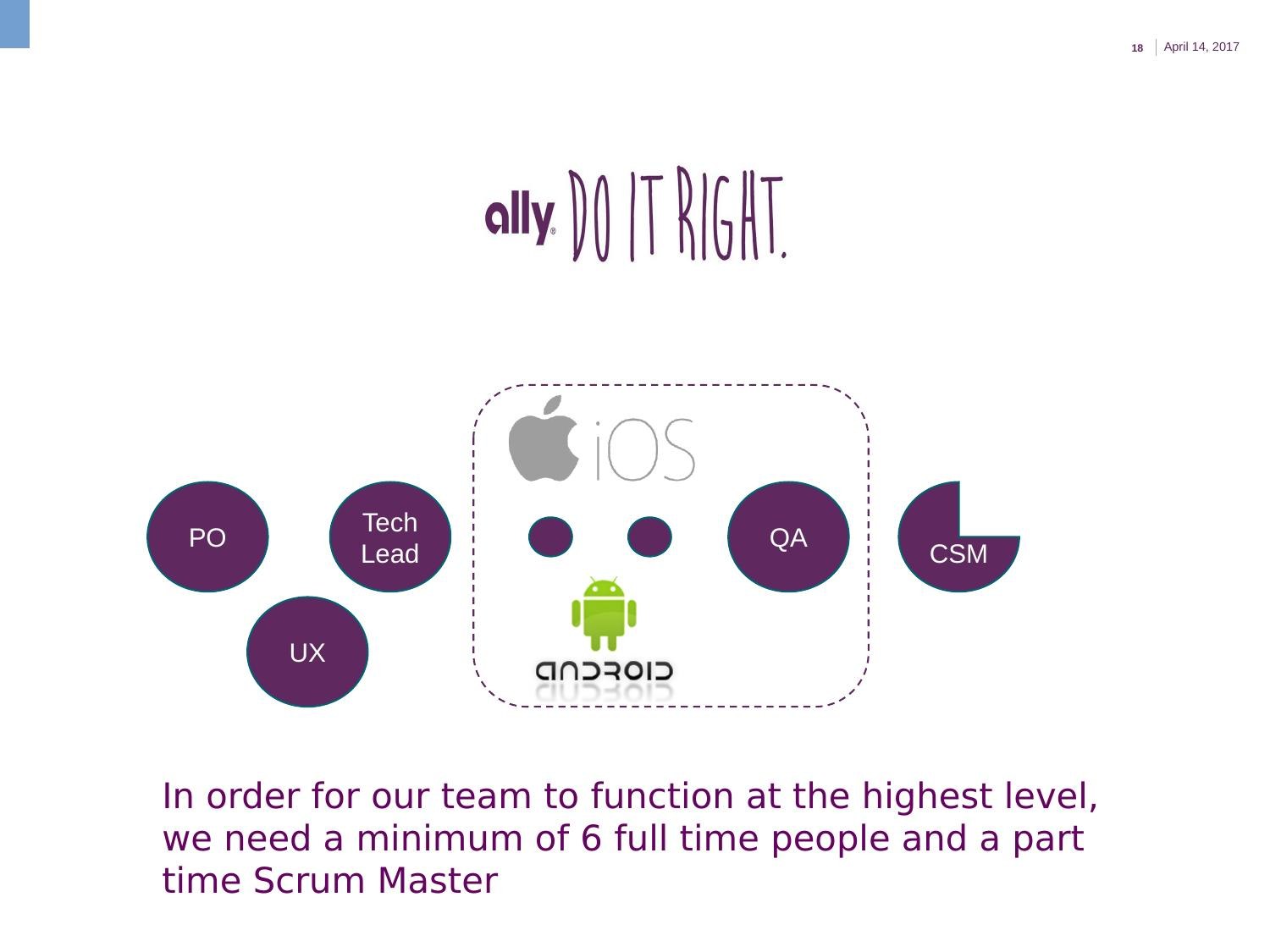
Their onboarding wasn’t a wiki tour. I stood in front of five new engineers and asked: why does this app exist? So people can trade stocks. Why do we care? Because we get paid when they trade. So the first thing we build together is the trade screen, the money screen, and along the way you’ll learn the business you’re coding for. Their first release went to production 74 days after the team formed: a new app for the holidays, December 2017, carrying the redesigned trade ticket whose story gets its own page on this site.
The pitch: I count clicks by hand across four apps and take the tally to the business. The 13-to-5 story.
The yes. I hire the team: two iOS, two Android, one QA. Forming, storming, norming on a deadline.
“New app by the holidays.” The redesigned trade ticket, native search, and new Orders and Research tabs ship 74 days after the team forms.
The monthly cadence sets in. Multi-select closes from holdings and the upgraded options trade screen begin rolling out.
Total gain and loss lands on every holding. A customer writes in to celebrate it, one month after asking for it.
The hardening release: 200+ defects closed since the rebuild began, plus dark theme and a watchlist upgrade.
Transfers ship. Money moves from Ally bank to brokerage inside the app for the first time, alongside option chains and a new quote detail screen.
The finale: the rebuilt options experience completes 2.0. Native, whole, done.
I hand the team its next roadmap and leave for Raytheon Technologies.
February is the month I keep the receipt for. A customer asked for something, and one release later it was on their screen:
“About a month ago I asked for each of my stocks to show how they were currently doing instead of needing to drill down on each. How great was it to see this morning? It WAS AWESOME! Thanks for making it happen!” — Android customer, February 13, 2018, as quoted in my sprint deck
That release came out of the same listening loop that produced the app’s new Overview tab. We pulled the usage data on TradeKing’s most-visited screens, interviewed users about what they actually checked every day, and built the screen around those answers instead of around our org chart. When the request in your inbox, the pattern in your analytics, and the interview notes all point at the same thing, you build it. That is the whole job: data in, design out, and a customer writing in a month later because the app finally shows what they came to see. Overview is still the first tab in the app today.
The autopsy
The app those five inherited was still, under the paint, TradeKing’s, and the paint was doing a lot of work. When my iOS developers opened up the old quote-detail profile, they found 74 files, most over a thousand lines, charts drawn with deprecated APIs, no VoiceOver, no accessibility support at all, and a fresh service call every time you tapped a tab. We put the whole ugly list on a slide because I wanted the business to see what we saw:
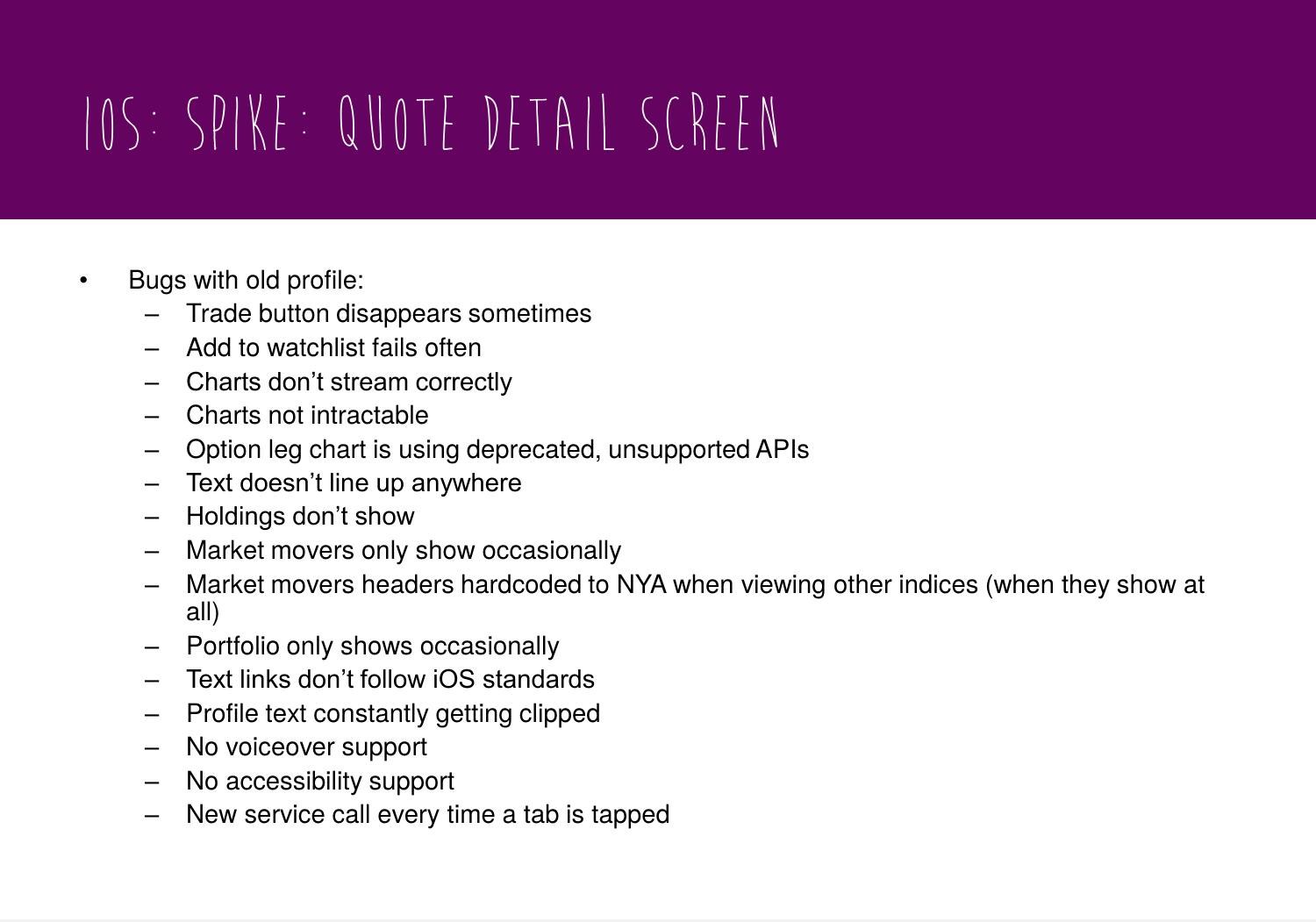
That’s why the rewrite never needed a fight. Everyone up the chain could see the old architecture would buckle under some coming iOS or Android update — if not this year’s, then the next one’s. The decision I’m prouder of is what we paired with it. A rewrite is invisible to customers, so we made the release worth watching: while the foundations came out, we fixed over 200 defects, made the app properly native on each platform so future OS updates would cost us weeks instead of quarters, and shipped the feature customers had asked about most: moving money straight from your Ally bank account to your brokerage account, which until then you simply could not do in the app.
Four legs on a phone
The crown of 2.0 was options. The old flow technically supported options trading the way a filing cabinet technically supports search: a bare list of strategy names, a blank ticket, and no help deciding. We rebuilt it around the trader’s actual decision, strategy first, with my favorite kind of design process: me as the subject-matter expert on one side of the table, real options traders in user testing on the other, and round after round of iteration between. What shipped let a retail customer build one-, two-, three-, and four-legged trades on a phone, from covered calls to spreads, collars, and condors, with the Options Playbook wired in so the screen teaches you the strategy while you build it.
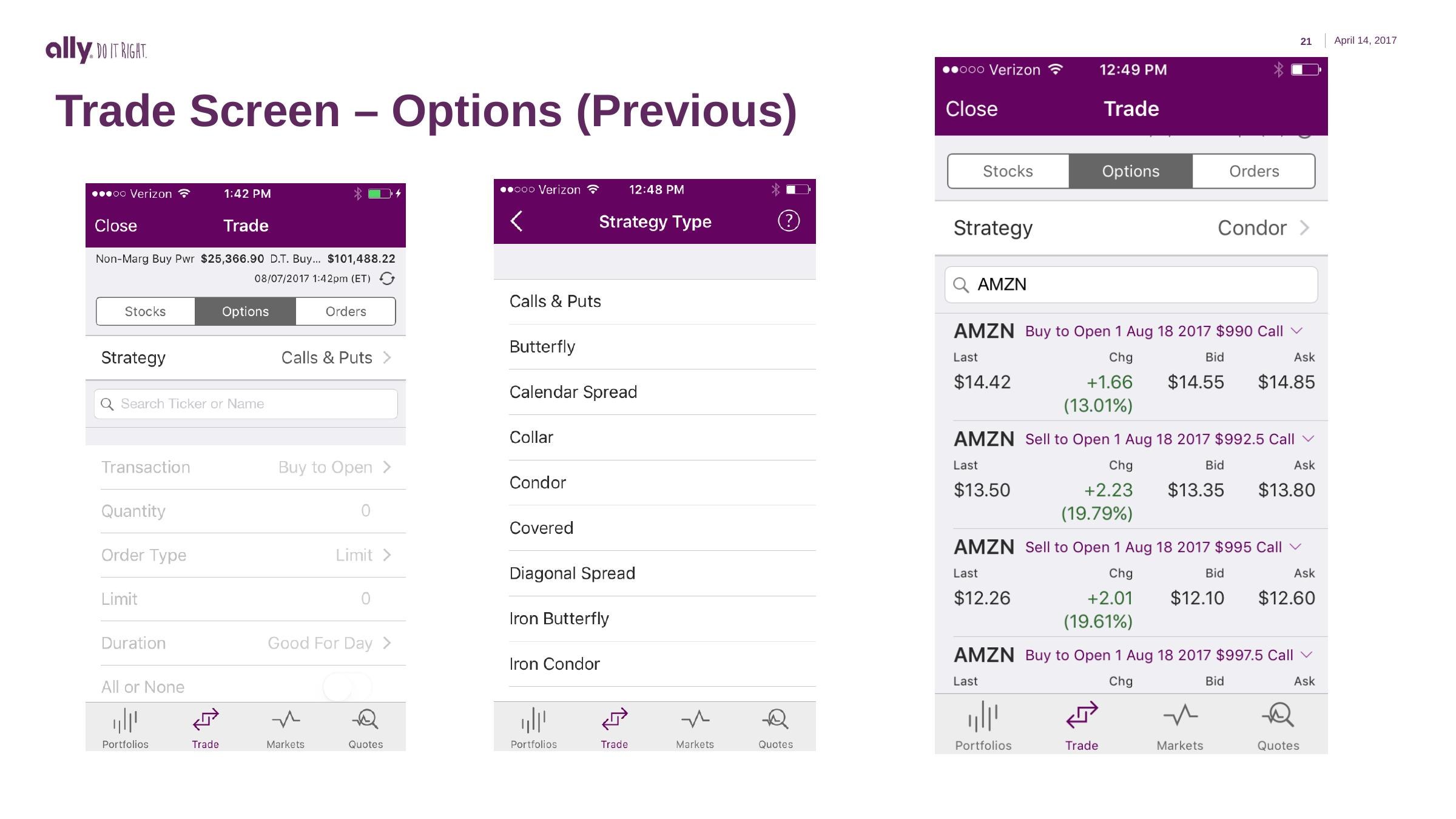
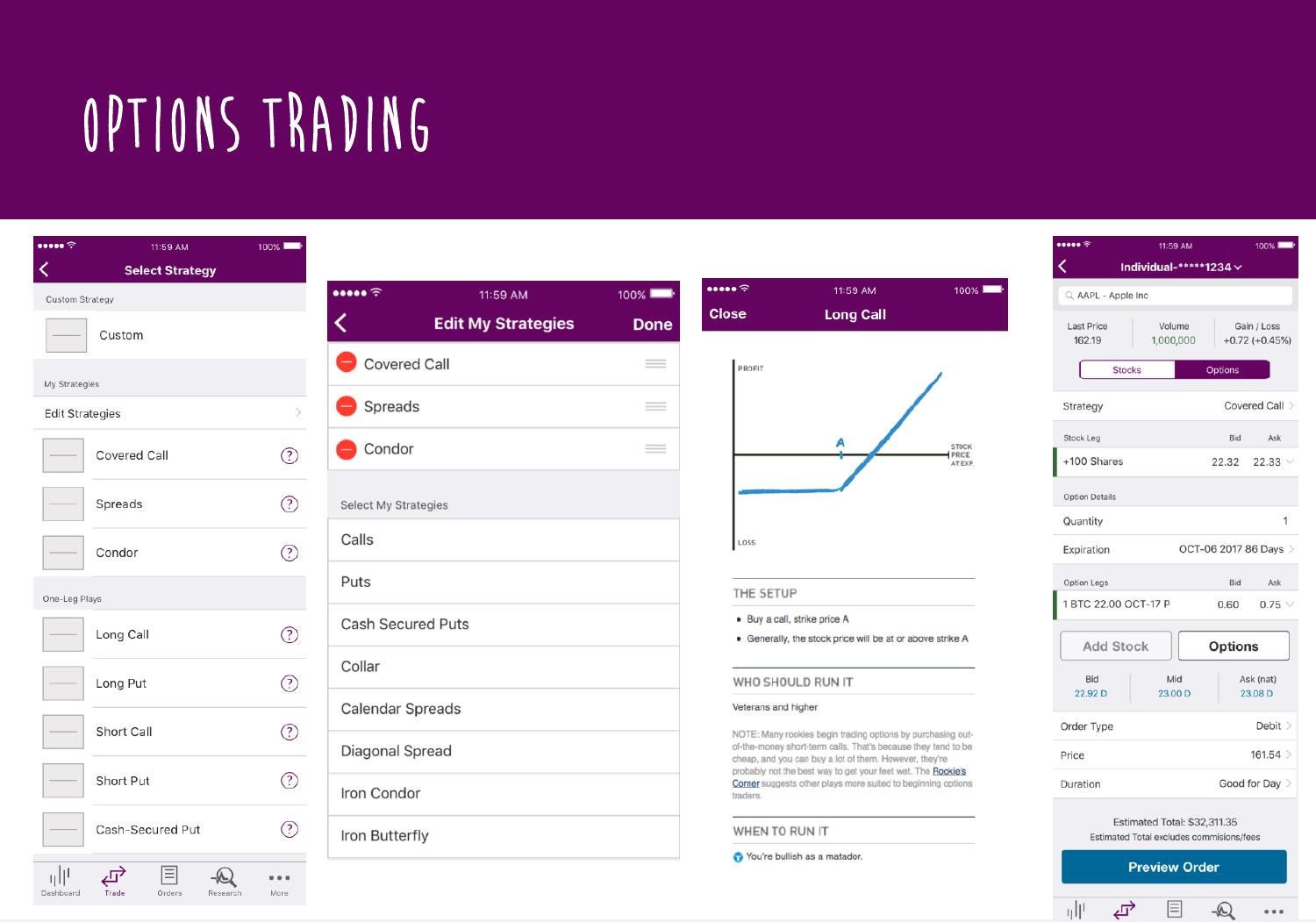
I am proud of that number, so let me say plainly what it means. Checkout is the share of started trades that actually get placed. Before the redesign, 12 of every 100 customers who opened an options ticket gave up before placing the trade. After it, nearly every one of them finished. People felt confident building multi-leg options trades on a phone, and that confidence was the design doing its job.
And the team I’d hired? By the time 2.0 shipped they were completing twice the story points of the other two mobile teams in the building. That was not because they worked longer hours. The room simply worked: culture, camaraderie, and everyone knowing exactly why the app exists.
Eight years later
One more thing, and it is my favorite kind of proof. In August 2026 I opened the Ally Invest app on my own phone and built a four-legged Apple trade, just to see. Eight years and who knows how many releases later, the screens are still recognizably the ones we designed: the tap-to-build options chain, the multi-leg ticket, the Bid, Mid, and Ask buttons sitting right under the legs. The paint is new and the app runs in dark mode now, but the bones are the 2018 bones. Good foundations keep shipping long after you leave.
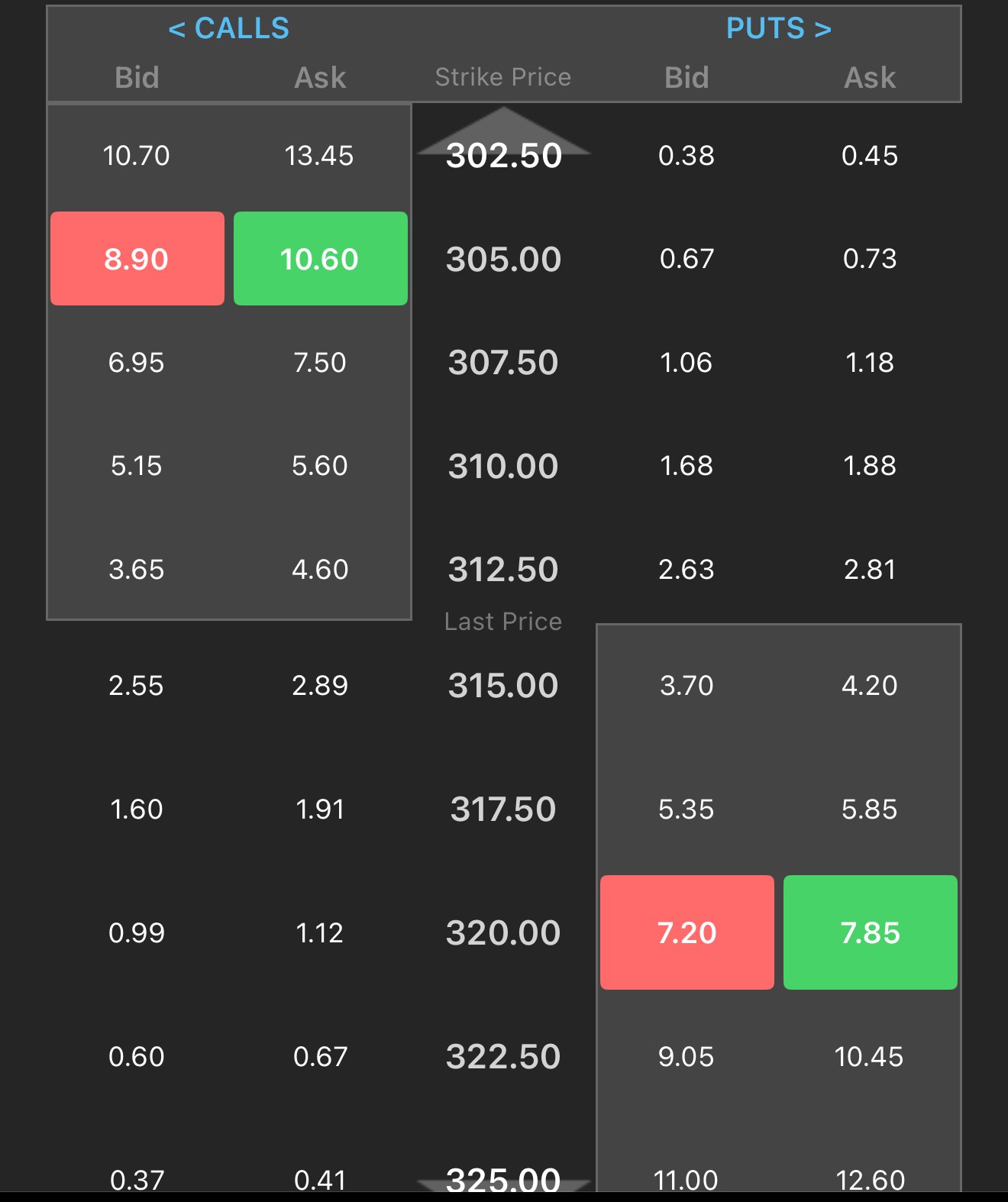
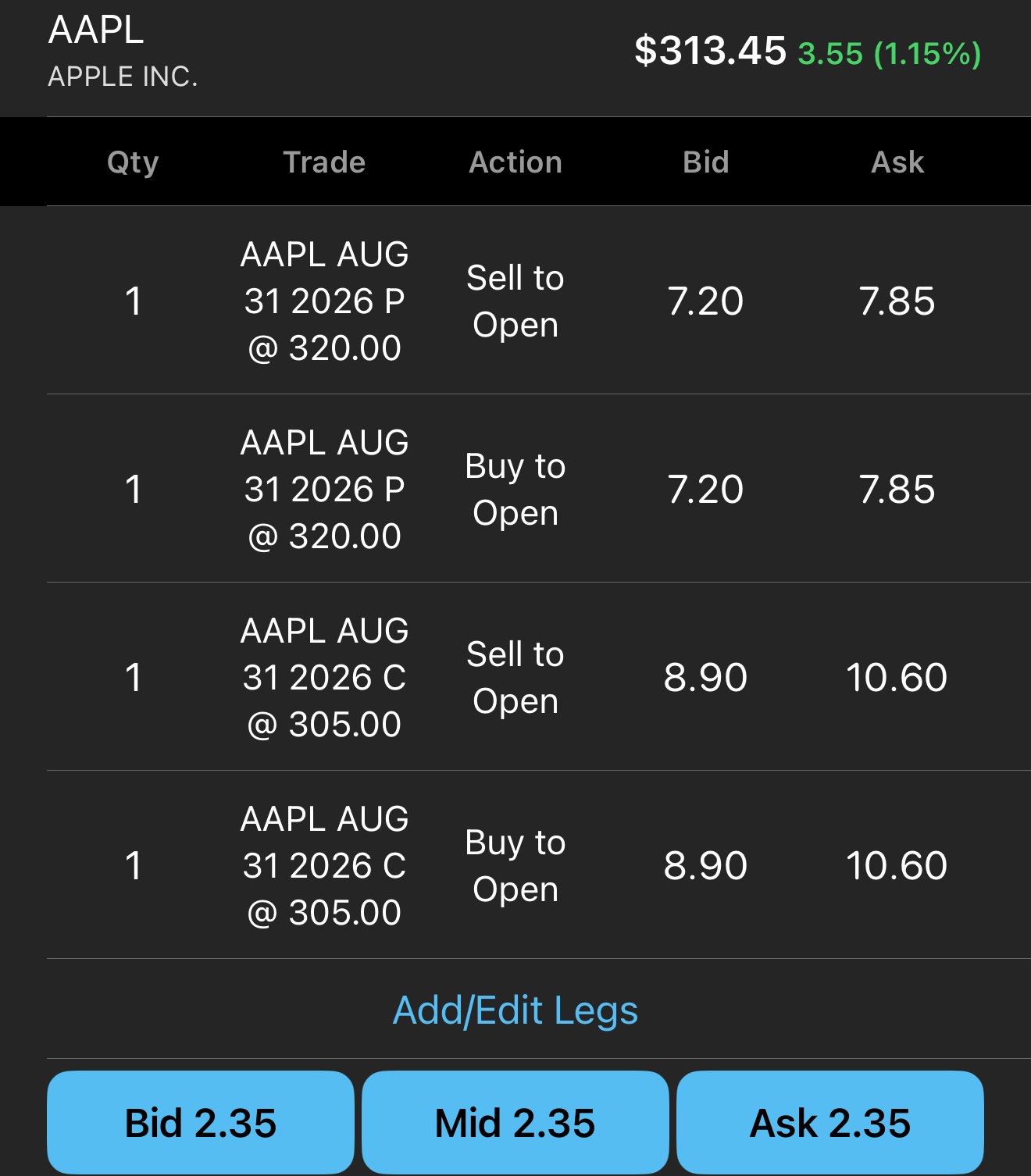
We didn’t ship 2.0 as one big unveiling. We released the agile way, iteratively and close to monthly through that winter and spring, which is why a customer was already celebrating an update in February. They talked, we listened. That’s how you build great stuff. By late spring 2018 the whole of 2.0 was out, and in June I handed the team its next roadmap and left for Raytheon Technologies. Leaving is its own kind of verdict on the work: the app didn’t need me anymore. The foundations were native, the debt was paid down, and the five people I’d hired were the ones who’d laid it, which was the point of hiring them first.
From inside the room

“Colby hired me in January 2018 as an Android developer to help build the new Ally Invest mobile experience after Ally’s acquisition of TradeKing. I had just moved to Charlotte from New Jersey, and it was my first experience of true Southern hospitality. What distinguished Colby was his deep understanding of both the customer and the brokerage industry. He taught our team how investors and active traders think, what information matters to them, and why speed and accessibility are critical for customers trading on a mobile device. He approached the product with an Apple-like attention to detail. Under his leadership, we rebuilt the Android application as a fully native experience, modernized significant parts of its architecture, improved performance, and expanded automated testing. He never treated design or technical quality as secondary. He made me a better developer by helping me understand not only what we were building, but who we were building it for and why each decision mattered. He remains one of the best leaders for whom I have worked.”
Mike Coppola · Lead Android Developer, Ally Invest mobile team · shared with permission, lightly condensed
P.S.
At some point during all this, Ally put me on an internal banner about getting involved. Bullet points and all. I stand by the enthusiasm.