Case study · TradeKing → Ally · “Customer Day One” · 2016–2017
600,000 customers, one button
On an ordinary weekday in early 2017, after market close, tradeking.com stopped being a website. This is what was behind the button that replaced it.
If you went to tradeking.com that evening, you didn’t see a brokerage homepage anymore — no marketing, no product tour, no reasons to open an account. You saw a banner: Your TradeKing account is moving to Ally, and we’ve done the heavy lifting for you. Now sign in to complete your move. One message. One button.
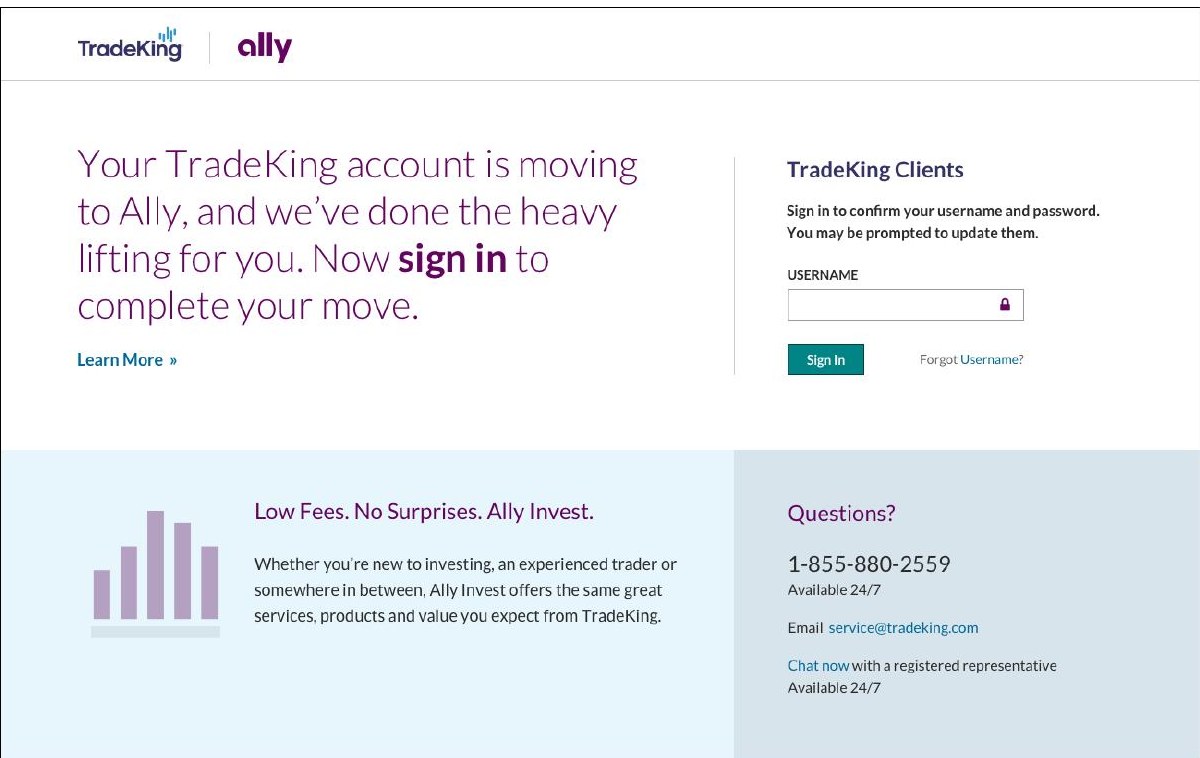
Behind that button, when a customer typed the username and password they’d always had, their whole relationship moved: identity, credentials, accounts — social, name, address, money — carried from TradeKing’s systems into Ally’s, automatically, in the time it took the success page to load. Then they were Ally customers, logging in at ally.com from that day forward, most of them without ever talking to a human being about it.
Ally had bought TradeKing the year before — $275 million, closed June 2016 — and somebody had to actually move the customers. Inside the project plan that work had a name I still love: Customer Day One. I led it. I ran the daily stand-ups — everything was in person back then — wrote every story the developers built from, gathered requirements from the business on both sides, sat with compliance until we’d answered every question they had, and worked with my lead developer — a genuine architect — to map where every piece of customer data actually lived and how it would transfer. I set up the test environment and ran the QA myself. I was the person who collected what everyone at two companies knew and turned it into one working thing.
The app that went dark on purpose
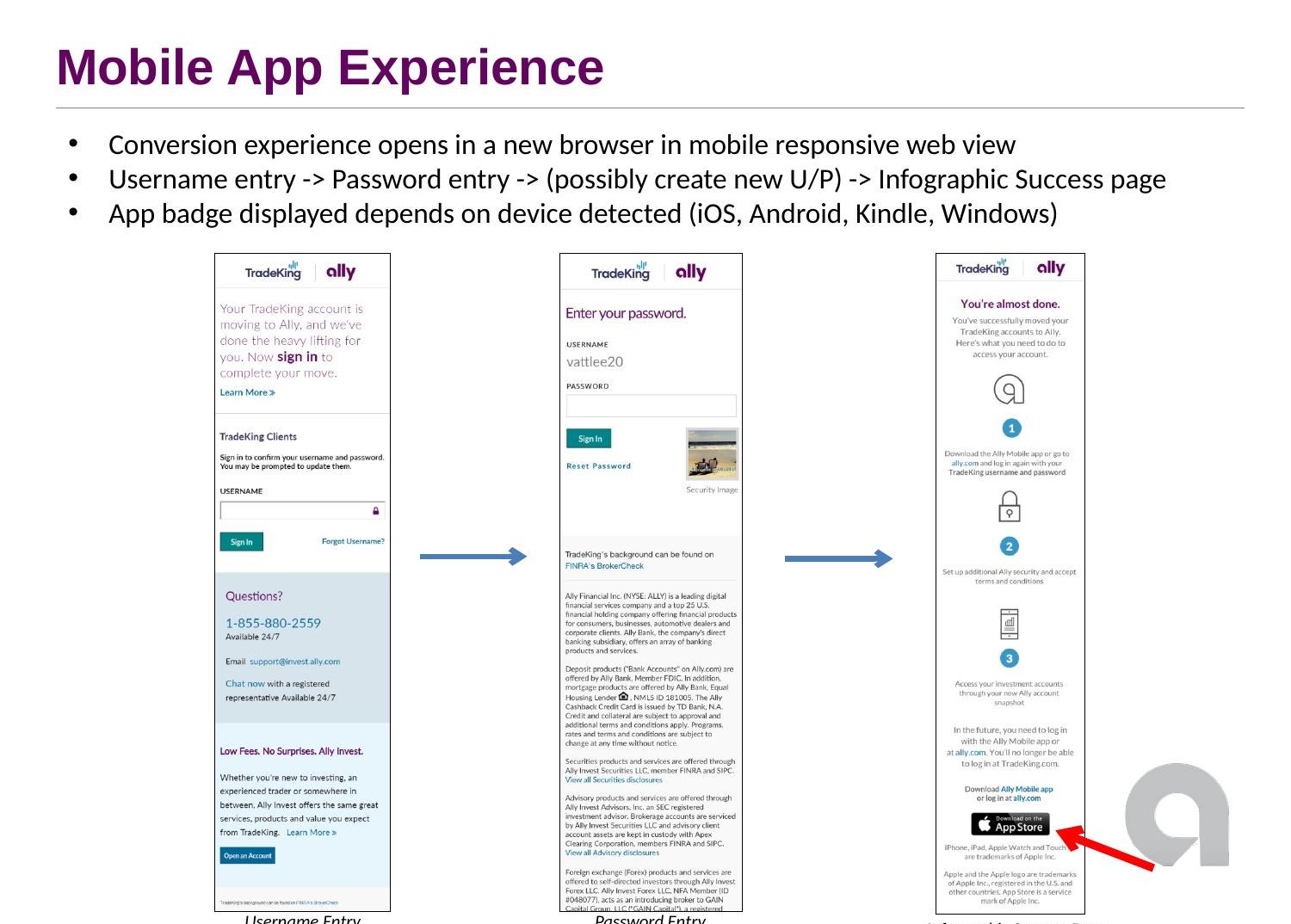
One early decision I’d defend again today: we did not build the conversion into the TradeKing mobile app. The app was going to die anyway — why spend engineering months teaching a dying app a trick it would perform once? Instead, on cutover day the app went dark deliberately: it woke up, told you your account had moved, and handed you to a responsive web page that did the actual conversion — built once, working everywhere, from an iPhone to a Kindle. When you finished, it pointed you to the right app store for the new Ally app, detecting your device to show the right badge.
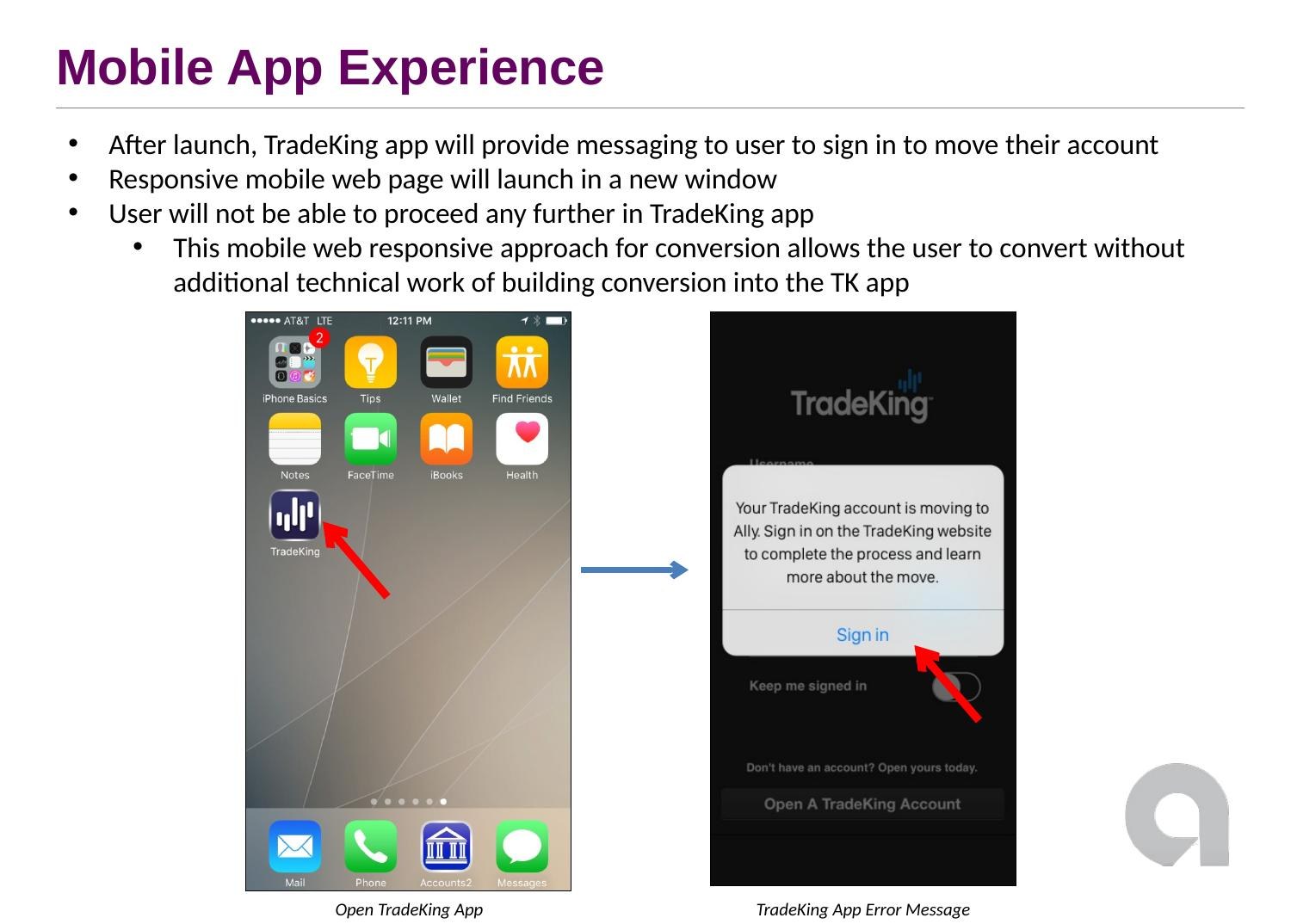
The flow itself had to absorb every kind of customer we had — six credential scenarios in all. Already an Ally customer or only TradeKing’s; a username that collided with an existing Ally one or slipped through clean; a password that met the bank’s standards or didn’t. Each path got its own version of the success page, telling that specific person exactly what to do next — because “you’re done, log in at ally.com” and “you’re done, but your username is different now” are very different sentences to read at 7pm on a Tuesday.
Test, test, test
I came to this project from consulting, where I’d once helped work through 21,795 loan files for a bank client — nearly one by one, eyes on documents, notes in spreadsheets. So my instinct here was honest and wrong: with a month of that kind of grind, you could onboard everybody by hand. At TradeKing nobody even entertained the thought. It was a technology company to its bones, and the only solution anyone discussed was building software that did the whole thing instantly — even though “instantly” took three months to build. That reframe — spend months so the moment takes seconds — changed how I’ve thought about every operational problem since.
What filled those months was mapping and testing. We learned where every field of customer data lived, built a complete test environment, and ran account after account through it — every type we had. The pattern that stayed with me: the more we tested, the more defects we found, and the better the cutover got. There was no clever substitute for it. We also chose the date carefully — not December, in the middle of year-end, when a botched move would have split customers’ tax documents across two companies. Early in the new year, after market close, on a day nobody would remember. That was the point: the biggest move in the company’s history, designed to feel like nothing happened.
How it landed
About 600,000 customers came across, with a 98.64% success rate — the figure my résumé has carried ever since. I’ll be straight about the remainder: I no longer remember exactly what made up the last 1.36 percent — dormant accounts, edge cases, people who never clicked — and I won’t dress up a guess as a memory. What I remember is the evening we hit go, and the strange quiet of a cutover that worked: the phones not ringing off the hook, the queue not filling, three months of test-test-test doing exactly what it was built to do.